

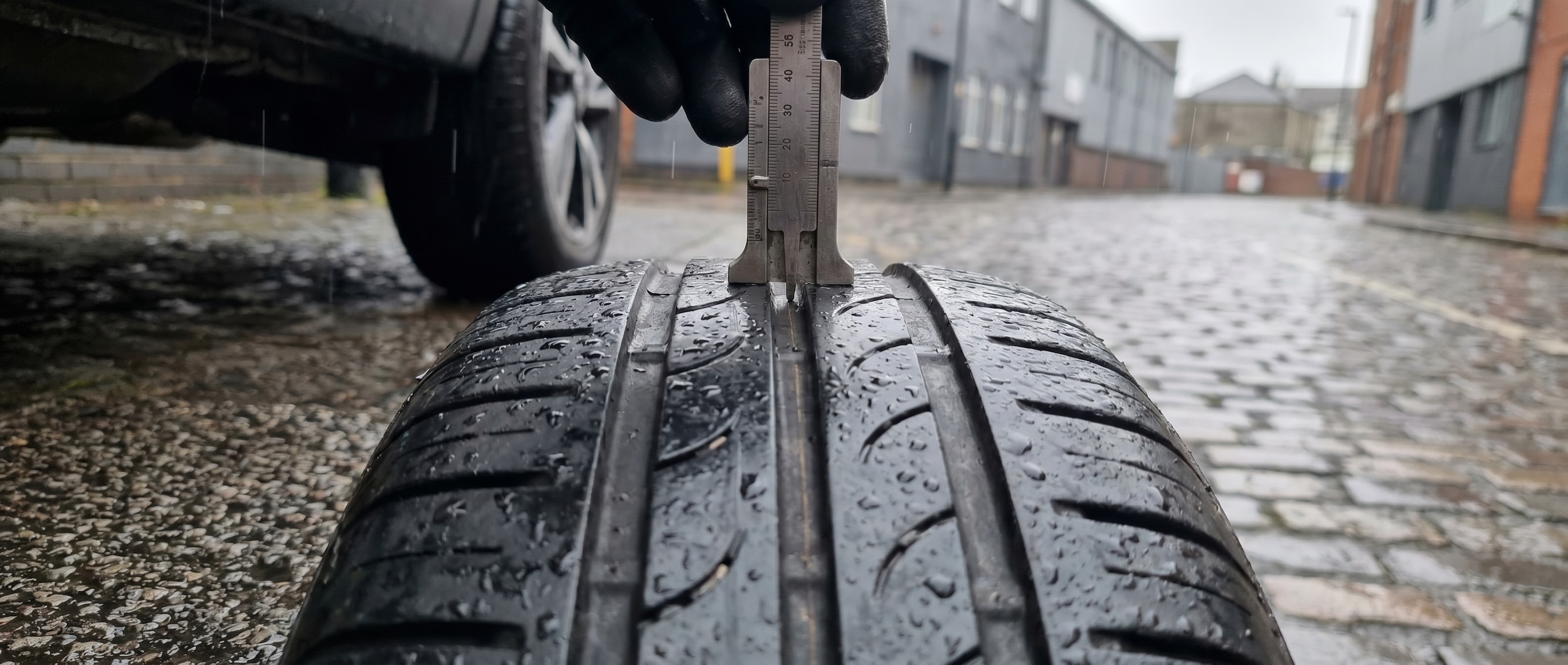
Birmingham drivers face an average of 56 inches of rain annually - that's more precipitation than Seattle - making tire tread depth critical for your safety. When to replace tires for Birmingham rain becomes a pressing question every spring and summer as thunderstorms roll through Jefferson County, turning I-65 and Highway 280 into challenging waterways. Understanding the simple penny test and recognizing wear patterns on your Nissan can mean the difference between confident handling and dangerous hydroplaning on wet roads from Vestavia Hills to Trussville.
The Quarter-Second Decision That Changes Everything
Your Nissan makes 47 tire-to-road calculations per second when driving through standing water - but worn tires can't evacuate water fast enough to maintain that crucial contact. Modern tire engineering creates channels specifically designed to push water away from the contact patch, allowing your vehicle to maintain grip even during Birmingham's sudden afternoon downpours.
The magic number for safe wet-weather driving is 4/32" of tread depth. While the legal minimum sits at 2/32", that measurement assumes dry conditions. When rain slicks the pavement around Red Mountain or pools on Highway 31, tires with less than 4/32" lose their ability to channel water effectively.
Did you know? A tire with 4/32" tread depth stops 100 feet shorter on wet pavement compared to the same tire worn to 2/32" - roughly the distance between Regions Field's home plate and first base.
Your Altima's advanced traction control systems or your Rogue's intelligent all-wheel drive can only work with the grip your tires provide. Even the most sophisticated safety technology becomes compromised when tires can't maintain road contact through water.
Understanding this relationship between tread depth and water evacuation helps explain why Birmingham's weather demands more frequent tire inspections than drier climates.
Birmingham's Unique Weather Challenge for Nissan Tires
Birmingham's subtropical climate creates a perfect storm for tire wear - literally. The combination of intense summer heat reaching 95°F on asphalt surfaces, sudden temperature drops, and those infamous afternoon thunderstorms creates expansion and contraction cycles that accelerate rubber degradation. Add in the occasional winter ice event that surprises everyone from Hoover to Mountain Brook, and your tires face challenges year-round.
| Weather Condition | Impact on Tires | Recommended Action |
|---|---|---|
| Summer Heat (90°F+) | Increases wear rate by 20% | Check pressure weekly |
| Heavy Rain Events | Requires 4/32" minimum tread | Monthly tread checks |
| Winter Ice/Sleet | Hardens rubber compound | Consider all-season replacement |
| Temperature Swings | Causes pressure fluctuations | Adjust pressure seasonally |
| Humidity + Heat | Accelerates dry rot | Inspect sidewalls quarterly |
The hilly terrain throughout Jefferson County adds another layer of complexity. Driving up Red Mountain Expressway or navigating the slopes near Vulcan Park puts additional stress on your tires, particularly during wet conditions when maintaining traction becomes critical. Your Murano's intelligent AWD system or your Pathfinder's advanced traction management can compensate for many conditions, but they rely on adequate tire tread to function properly.
Local driving patterns matter too. Stop-and-go traffic on I-459 during rush hour generates more heat and wear than steady highway cruising, while frequent trips on the winding roads near Oak Mountain State Park stress tire edges differently than straight-line driving.
The Famous Penny Test Every Birmingham Driver Should Master
Here's the tire test that takes 30 seconds but could save your life on a rainy Birmingham afternoon. While many drivers have heard of the penny test, few perform it correctly or understand what they're actually measuring.
Step 1: Find a penny - Lincoln's head should face you
Step 2: Turn Lincoln upside down - His head points into the tire tread
Step 3: Insert the penny - Place it in the tread groove, not on a raised tread block
Step 4: Check Lincoln's head visibility:
- Can't see the top of his head = Safe (more than 2/32")
- Can see all of Lincoln's head = Replace immediately (less than 2/32")
- Can see his forehead = Schedule replacement soon (approaching minimum)
But here's what most guides miss: the penny test only tells you the legal minimum. For Birmingham's rain, upgrade to the quarter test:
The Quarter Test for Wet Weather Safety:
- Washington faces you, upside down in the tread
- If you see above Washington's head = Time for new tires (less than 4/32")
This measurement provides the safety margin needed for our heavy rains.
Pro tip: Check three spots on each tire - inner edge, center, and outer edge. Uneven wear patterns tell a story about alignment, inflation, or suspension issues that need attention.
Your Sentra might show even wear across all tires, while your Frontier could display more wear on the rear tires from hauling loads to Railroad Park for weekend events.
Reading Your Nissan's Tire Wear Story
Every tire tells a story through its wear pattern, and understanding these patterns helps Birmingham drivers identify issues before they become safety hazards. Your tires are constantly communicating - you just need to know the language.
Center Wear: The tread wears faster in the middle than the edges
- Cause: Over-inflation forcing the center to carry more load
- Common on: Altima and Maxima when drivers increase pressure for fuel economy
- Fix: Adjust to door jamb specifications, not maximum sidewall pressure
Edge Wear: Outer edges wear faster than the center
- Cause: Under-inflation allowing edges to carry excessive load
- Common on: Pathfinder and Armada when towing without adjusting pressure
- Fix: Check pressure weekly and adjust for load conditions
One-Sided Wear: Inner or outer edge wears excessively on one side
- Cause: Alignment issues from Birmingham's pothole season
- Common on: Any model after hitting road hazards on I-20
- Fix: Professional alignment check and adjustment
Cupping/Scalloping: Dips or cups appear around the tread
- Cause: Worn suspension components or imbalanced tires
- Common on: Higher-mileage vehicles navigating rough roads
- Fix: Suspension inspection and tire balancing
Feathering: Tread blocks develop sharp edges on one side, smooth on the other
- Cause: Improper toe alignment creating a dragging effect
- Common on: Vehicles with modified suspension or after curb strikes
- Fix: Precise alignment adjustment
Regular wear pattern checks during your morning coffee run to The Red Cat or evening commute past the Birmingham Museum of Art can catch developing issues early.
When Birmingham Weather Demands New Tires on Your Nissan
Timing your tire replacement requires balancing safety, weather patterns, and smart budgeting. Birmingham's weather creates specific windows of opportunity and urgency that every Nissan owner should understand.
Ideal Replacement Timing:
- Late February/Early March: Before spring rain season intensifies
- Early October: Preparing for fall weather changes and occasional winter events
- After 30,000-40,000 miles: Typical all-season tire lifespan with Birmingham driving
Warning Signs Requiring Immediate Action:
- Hydroplaning on Highway 280 during moderate rain
- Longer stopping distances on wet Lakeshore Drive
- Vibration when driving through standing water
- Visible tread separation or sidewall cracks
- Tread depth below 4/32" with rain in the forecast
The investment in new tires pays dividends in safety and confidence. Consider this scenario: You're driving your Rogue home from work as a thunderstorm rolls over Red Mountain. With proper tread depth, you navigate the pooling water on 31st Street confidently. With worn tires, that same commute becomes a white-knuckle experience.
Browse our new inventory to explore Nissan models with advanced safety features that work hand-in-hand with proper tires. Many newer models include tire pressure monitoring systems and traction management that maximize the effectiveness of quality tires.
Professional Tire Services That Protect Your Investment
While the penny test provides a quick assessment, professional tire service goes deeper to ensure your safety on Birmingham's challenging roads. A comprehensive tire inspection examines aspects you can't see with a simple tread check.
What Professional Inspection Includes:
- Digital tread depth measurement at multiple points
- Internal tire inspection for hidden damage
- Pressure check with temperature compensation
- Valve stem and TPMS sensor evaluation
- Alignment measurement to prevent premature wear
- Rotation recommendations based on wear patterns
The technology available at modern service centers can identify issues before they become visible. For instance, internal belt separation might not show externally but can cause sudden tire failure during a rainstorm on I-459.
Did you know? Rotating your tires every 5,000-8,000 miles can extend their life by up to 20%, saving Birmingham drivers hundreds of dollars while maintaining wet-weather safety.
Regular professional service becomes even more critical for all-wheel-drive models like the Rogue or Murano. These systems require all four tires to maintain similar tread depths to prevent drivetrain damage - something only precise measurement can ensure.
When you're ready to ensure your Nissan performs safely in any weather, schedule service with certified technicians who understand both your vehicle and Birmingham's unique driving conditions.
Common Questions About When to Replace Tires for Birmingham Rain
How often should I check my Nissan's tire tread depth in Birmingham, AL?
Check your tire tread depth monthly during Birmingham's rainy season from March through September, and at least quarterly during drier months. The frequent thunderstorms and heavy downpours common to the Birmingham area make regular monitoring essential for safety on wet roads throughout Jefferson County.
Does the type of Nissan I drive affect how quickly tires wear in Birmingham weather?
Yes, heavier models like the Armada and Pathfinder typically experience faster tire wear than lighter vehicles like the Sentra or Versa. All-wheel-drive models also require more frequent monitoring since all four tires must maintain similar tread depths to protect the drivetrain system from damage.
What's the minimum safe tread depth for driving on wet Birmingham roads?
While 2/32" is the legal minimum, safety experts recommend 4/32" for wet weather driving in Birmingham. This extra tread depth provides crucial water evacuation capability during the heavy rains common from Vestavia Hills to Trussville, significantly reducing hydroplaning risk.
Can I replace just two tires on my Nissan, or do I need all four?
Front-wheel-drive Nissan models can typically replace tires in pairs on the same axle, installing new tires on the rear for safety. However, all-wheel-drive models like the Rogue and Murano require all four tires to maintain similar tread depths to prevent mechanical damage.
How do Birmingham's summer temperatures affect Nissan tire lifespan?
Birmingham's summer heat, often exceeding 90°F with road temperatures reaching 140°F, accelerates tire compound degradation by approximately 20%. Combined with humidity and UV exposure, tires here typically need replacement 6-12 months sooner than in milder climates.
Where can I get my Nissan's tires inspected in Birmingham, AL?
Professional tire inspection is available at certified Nissan service centers throughout the Birmingham area. These facilities have specialized equipment to digitally measure tread depth, check alignment, and identify wear patterns specific to local driving conditions.
Your Safety Depends on Taking Action Today
Understanding when to replace your tires transforms Birmingham's rainy weather from a driving challenge into just another commute. The simple tests and knowledge you've gained here - from the quarter test to reading wear patterns - empower you to make informed decisions about your Nissan's tire safety. Whether you're navigating the curves near Vulcan Park or cruising through downtown during a summer thunderstorm, proper tire tread depth provides the confidence and control you need.
The team at Hallmark Nissan brings decades of experience helping Birmingham drivers stay safe through every weather condition our city delivers. From professional inspections to tire replacement, trust the experts who understand both your vehicle and the unique demands of Alabama driving.
Categories:
Social