

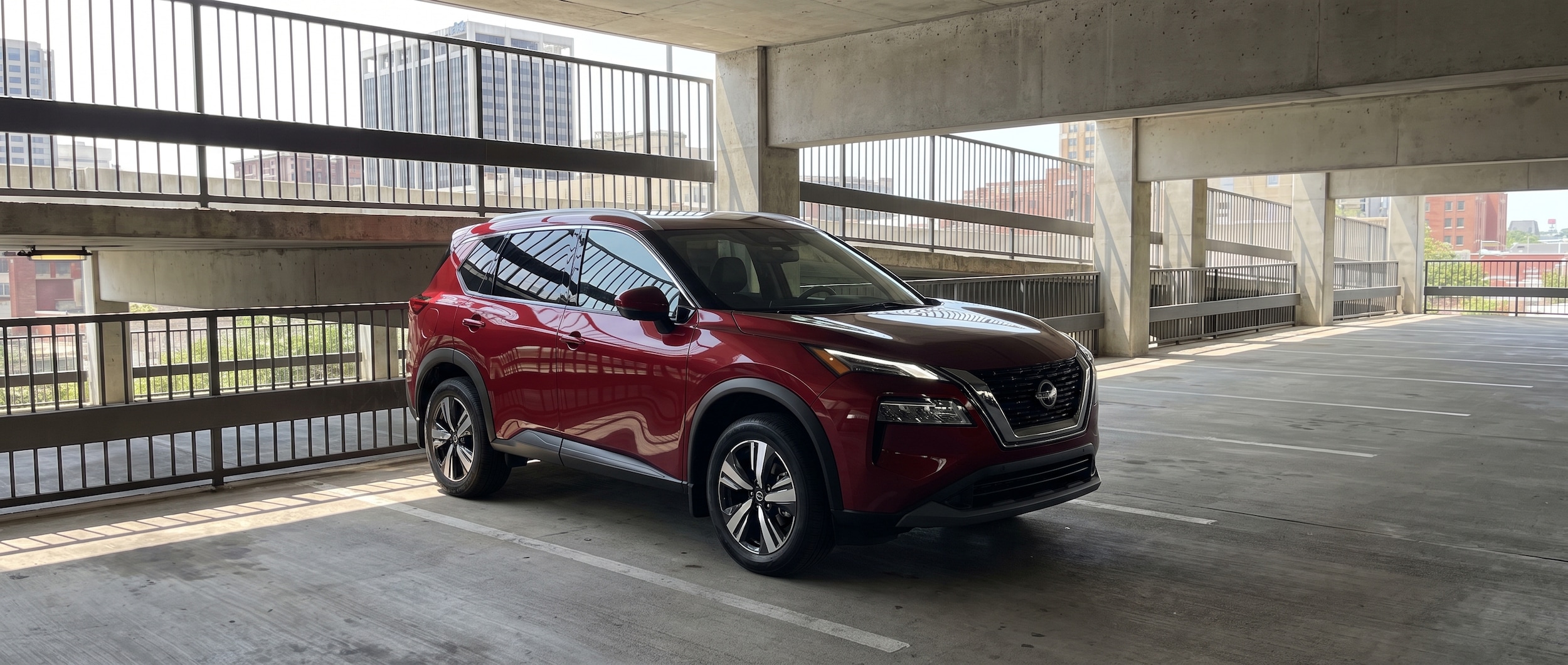
If you have been driving Birmingham's roads this summer, you already know: the metro is mid-construction. Jefferson County alone launched a major paving program this summer, targeting South Shades Crest Road, Warrior Kimberly Road, Bone Dry Road, and Edwards Lake Road. Add the active I-59 Trussville widening, the ongoing Lakeshore Parkway and Morgan Road Extension project, and the new Homewood diverging diamond work, and you have a metro full of pavement transitions, abrupt lane drops, and construction debris sitting in tire paths.
The bottom line: hitting one hard seam or pothole in a construction zone can be enough to shift your Nissan's wheel angles out of the range the manufacturer specified. When that happens, the car does not always feel broken -- it just feels slightly wrong. A persistent pull to one side, a steering wheel that sits a few degrees crooked while you drive straight, or front tires wearing down on one edge faster than the other are the three most common signals. Get those symptoms checked before the tires tell the story for you.
Schedule your alignment check at Hallmark Nissan -- our service team uses a four-wheel thrust alignment procedure, which Nissan specifies for all Nissan and Infiniti models, to measure and correct your wheel angles to factory spec.
What's Actually Happening Under Your Nissan When Alignment Goes Out?
A wheel alignment is not about the steering wheel -- it is about the angles at which each tire meets the pavement. Three angles matter: toe (whether the fronts of the tires point slightly inward or outward), camber (the inward or outward lean of the tire when viewed from the front), and caster (the tilt of the steering axis, which affects straight-line stability). When any of these shift beyond the factory tolerance, the tires stop rolling cleanly and begin scrubbing against the road instead.
Here is the specific point most alignment guides skip: on the majority of Nissan front-wheel-drive models -- including the Rogue, Altima, Sentra, and Kicks -- only toe is directly adjustable at the front axle. Camber and caster at the front are set by the suspension geometry and are not designed to be adjusted. Per Nissan's service documentation, if front camber or caster reads out of specification after a road impact, that is not a routine alignment number to dial in -- it typically means a suspension component sustained damage. That distinction matters when you get an alignment report back from a shop.
The table below maps the symptoms you are likely noticing to the probable angle involved and what the appropriate response is.
| Symptom you notice | Angle most likely involved | What it means | What to do |
|---|---|---|---|
| Car pulls steadily left or right on a flat road | Toe misalignment (front) | Toe is out of factory range -- most common pothole outcome | Toe adjustment (routine service) |
| Steering wheel sits crooked while driving straight | Toe or thrust angle | Front wheels are not pointing along the vehicle centerline | Four-wheel thrust alignment |
| Front tire wearing faster on one inside edge | Camber angle (negative) | Tire is tilting inward excessively | Alignment check -- if camber is out on a FWD Nissan, inspect for bent component |
| Car wanders and feels "loose" at highway speeds on I-59 or I-65 | Caster angle | Steering axis tilt is off; reduces straight-line stability | Full suspension inspection -- caster is not adjustable on most Nissan FWD models |
| Vibration in steering wheel, especially above 40 mph | Multiple angles or tire balance | Could be alignment, balance, or both | Alignment + balance inspection together |
Construction Zone Impacts Are the Most Common Cause Right Now
Jefferson County's summer paving program means that four major roads are actively being resurfaced through this summer and into next year -- and resurfacing creates a specific hazard that is easy to underestimate. The pavement transitions at the beginning and end of construction zones, where old asphalt meets a freshly ground surface, can produce a sharp, asymmetric impact that sends a sudden lateral force through one tire and one corner of the suspension. The Lakeshore Parkway and Morgan Road Extension project, which is expected to continue through 2027, is creating similar transitions along one of Jefferson County's most heavily traveled corridors.
The force mechanics matter. When a tire drops into a gap or strikes a sharp edge at the start of a milled section, the impact compresses that corner's strut or shock while the opposite side stays at normal ride height. That unequal compression pushes the struck wheel's toe angle past specification. On Nissan FWD platforms, where toe is the only adjustable front-axle angle, that is actually the best-case scenario -- it is correctable with a straightforward alignment. The concern arises when the impact is severe enough to also bend a tie rod, control arm, or strut mount, shifting camber or caster readings. Because those angles are not adjustable on most Nissan FWD cars, a shop cannot "dial them back in" -- the bent part needs to be identified and replaced first.
The Nissan Rogue's independent front suspension is tuned for comfort and commute stability, which makes it responsive to road feedback. A hard construction-zone hit that might pass unnoticed on a truck can produce a measurable toe shift in the Rogue's front axle. The Nissan Altima and Nissan Sentra, both popular on Birmingham commutes, share this FWD layout and the same non-adjustable front camber/caster design.
Caution: A single loud thump over a construction seam does not always mean your alignment is gone. Alignment problems from road impacts can develop gradually over multiple smaller hits on rough pavement -- or announce themselves immediately after one hard strike. Either pattern is worth checking.
Next step: If you noticed pulling, a crooked steering wheel, or uneven wear after driving through any of Birmingham's active construction corridors this summer, do not wait for your next oil change to mention it. An alignment check catches the problem before it turns into a tire replacement.
What You Can Check Yourself -- and When You Need the Service Team
There are a few quick checks you can do before you ever bring the car in. They will not replace a calibrated alignment rack, but they give you useful information.
The straight-road drift test. On a flat, empty stretch -- not a crowned road -- hold the steering wheel lightly with minimal input and watch whether the car tracks straight or drifts. A gentle drift on a crowned road is normal road design. A consistent pull that requires you to steer against it on flat pavement is alignment.
The steering wheel centering check. With the car going straight, glance at the Nissan logo on your steering wheel hub. If it is rotated noticeably left or right rather than sitting level, your toe or thrust angle is likely off.
The tire edge check. Crouch at each front tire and run your fingers from the outside edge to the inside edge across the tread. If the inside edge of either front tire feels noticeably more worn -- or has a sharper, feather-like texture -- than the outer edge, that is camber-related wear. Per Nissan's service documentation, if front camber is measurably out of spec on a FWD model, a bent component is the probable cause, not a routine adjustment opportunity.
When any of those checks produce a clear result, or when you are not sure, the service team is the right next step. A four-wheel thrust alignment -- the procedure Nissan specifies for all Nissan vehicles -- measures all four corners, compares them to factory spec, adjusts what is adjustable, and prints a before-and-after report so you can see exactly what changed. If camber or caster is out of spec and nothing is adjustable, the report also documents that, giving you a clear starting point for any further suspension diagnosis.
Frequently Asked Questions
Can one pothole in a Birmingham construction zone really knock my Nissan's alignment out of spec?
Yes, and it does not have to be a catastrophic impact. The tire striking a sharp pavement edge or dropping into a milled section gap transmits a sudden lateral force directly through the suspension to the wheel. That force can shift the front toe angle out of the factory range in a single hit, causing pulling or a crooked steering wheel immediately after. More gradual misalignment from repeated smaller bumps is also common on roads with extended rough-pavement stretches.
How is alignment different from tire balancing, and which one should I get first?
These are two separate services that fix different problems. An alignment adjusts the angles at which your tires meet the road -- it fixes pulling, a crooked steering wheel, and uneven edge wear. Tire balancing corrects uneven weight distribution around the wheel itself -- it fixes a vibration or shimmy that tends to be most noticeable at highway speeds. If you are dealing with pulling and edge wear, start with alignment. If you mainly notice a steering-wheel vibration above 40 mph with no pulling, start with a balance check.
What does the alignment report tell me?
A four-wheel thrust alignment report shows your car's before-and-after measurements for all four wheels, compared to Nissan's factory specifications. If any angle falls outside the acceptable range, it documents that finding. For FWD Nissan models, the report clarifies which angles were adjustable (typically front toe) and which are suspension-geometry setpoints (camber and caster). If an unadjustable angle is out of spec, that report flags the need for a suspension inspection to find the bent or damaged component.
Categories:
Social