
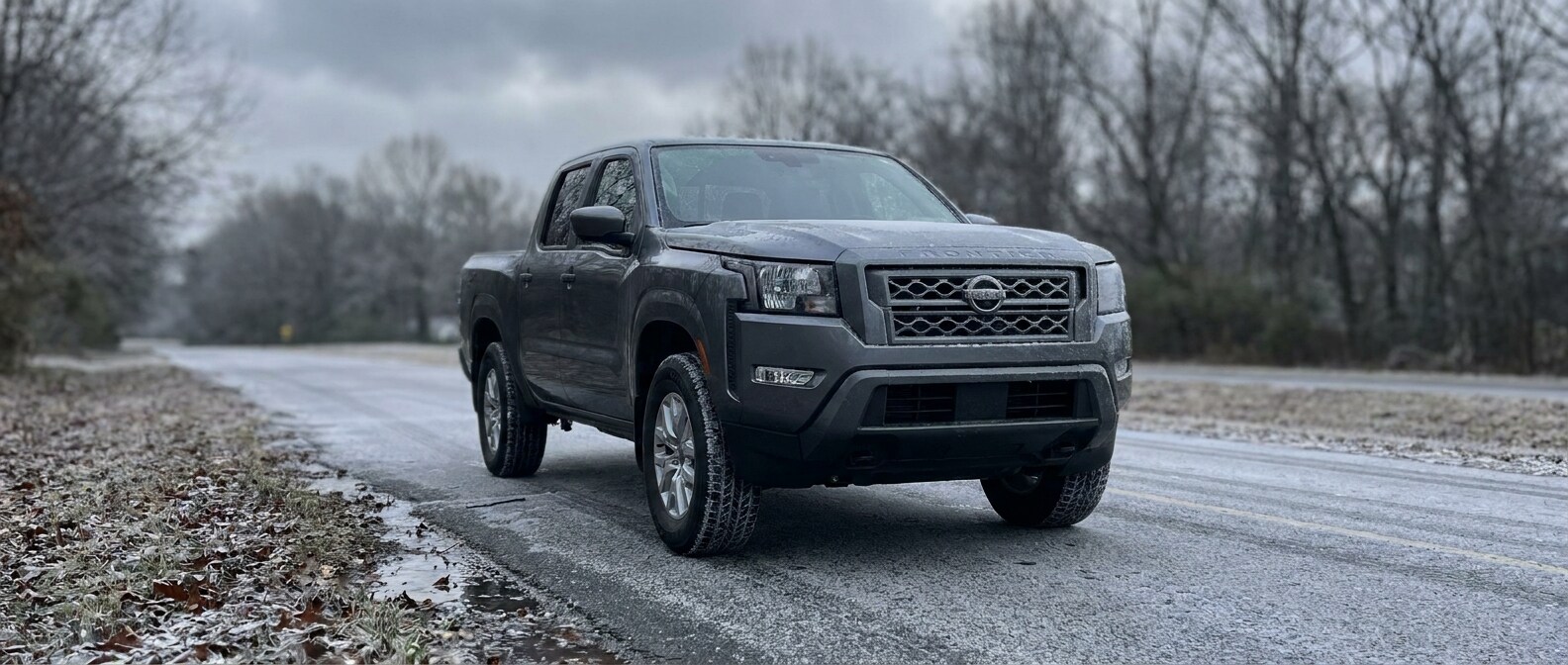
Birmingham's freeze season doesn't announce itself. One week you're running the air conditioning, and the next you're scraping frost off the windshield before a 7 a.m. commute while I-65 overpasses turn slick without warning. The Frontier is built for this, as long as you've done the prep work before that first cold front rolls in.
A 2026 Nissan Frontier with a few hours of deferred maintenance is a different truck in January than one that's been looked at in November. You just need to know which checks actually matter for the way Birmingham winters behave. You don't need to reinvent the wheel.
When Does Birmingham's Freeze Window Actually Open?
Birmingham's freeze window usually cracks open in the second week of November and settles in hard within a couple of weeks, which is exactly why the prep calendar matters more here than the raw temperature does. According to NOAA's 1991-2020 climate normals, Birmingham's typical first frost falls around November 10 to 12, and a hard freeze at or below 28 degrees Fahrenheit usually follows within about two weeks.
January is the coldest month, with average lows around 35 to 36 degrees Fahrenheit and average highs of 54 degrees. So the window to get your Frontier prepped is now, in mid-November, before the first sustained cold snap settles in.
| Task | Do It By | Why It Matters for Birmingham |
|---|---|---|
| Oil and filter change (0W-20 full synthetic) | Before first hard freeze (by ~Nov 24) | Keeps the 3.8L V6 protected at cold-start temperatures |
| Battery load test | Early November | Batteries that are several years old underperform when cranking in cold morning air |
| Washer fluid swap (winter-rated blend) | Now | A summer blend freezes in lines and on the glass the first frosty morning |
| Tire tread and pressure check | Before first frost | Cold air drops tire pressure; worn tread loses grip on wet pavement fast |
| 4WD system exercise (4x4 trims only) | Before first freeze event | Parts that rarely move can seize; a quick engagement now prevents surprises in January |
| Brake inspection | Now, especially before winter rains | Wet Birmingham weather accelerates brake pad wear compared to dry conditions |
| Cabin air filter | 30,000 miles or 24 months | A clogged filter strains the HVAC blower just when you need defrost most |
The National Weather Service notes that black ice can form when moisture from rain or melted frost freezes overnight, and that bridges and overpasses ice first because cold air hits them from above and below. ALDOT treated roads including I-20 and I-59 this past January ahead of exactly that scenario. The prep window between now and that first freeze is about two weeks. Call it your runway.
The 4WD Play: What Your Frontier Actually Does (and Doesn't Do) in Cold Weather
Your Frontier's 4WD earns its keep on a wet or glazed morning, yet it does nothing for you on dry pavement except wear itself out, and the space between those two facts is where cold-weather confusion tends to live. The 2026 Frontier's 4x4 trims run a part-time 4WD system.
Per Nissan's own engineering documentation, 4-High is designed for loose or slippery surfaces like wet pavement or light snow, not for dry road driving. Running 4-High on dry asphalt binds the drivetrain and causes premature wear. On a typical Birmingham cold morning that's 40 degrees and damp but not frozen, 2WD is the right setting, plain and simple. Schedule a service appointment if you're not certain your shift-on-the-fly system is engaging and disengaging cleanly, because a sticky transfer case linkage won't tell you it's broken until you need it.
The 2WD Frontier carries its own traction tech, too. Active Brake Limited Slip (ABLS) is standard on every grade of the 2026 Frontier, per Nissan's press materials. ABLS applies individual brake pressure to a spinning wheel to redirect torque to the wheel with grip. On a damp or lightly glazed Birmingham road, that's a real, working safety mechanism already on the truck. The PRO-4X adds an electronic locking rear differential on top of that, which is the right tool for a situation where you've genuinely lost traction.
Schedule Your Pre-Winter Service Check
Your Pre-Winter Go-List: What to Confirm Before the Cold Front Hits
Everything above condenses into one checklist, and most of it you can confirm in your own driveway this weekend with a flashlight and ten minutes, though a couple of items are worth leaving to a technician. Walk through it this weekend, and anything you can't confirm yourself, let us handle at the service drive.
Fluids
- Engine oil: 0W-20 full synthetic (Nissan spec). Change now if you're within 1,500 miles of your interval.
- Coolant: Check the reservoir level. The Frontier's cooling system holds 12.7 quarts, and topping off with the wrong type of antifreeze can cause corrosion in the aluminum block.
- Washer fluid: Pull the reservoir cap and give it a smell. If it smells like summer washer fluid, replace it now with a winter-rated blend that won't freeze at temperatures below 32 degrees Fahrenheit.
- Brake fluid: If it's been two years or longer, have a technician check it. Brake fluid absorbs moisture over time, which lowers its boiling point.
Tires and Brakes
- Tread depth: The legal minimum is 2/32 of an inch, but stopping distance on wet pavement climbs meaningfully below 4/32. Birmingham roads don't demand dedicated winter tires, though bald all-seasons on a cold, wet morning are a problem.
- Tire pressure: Check it cold, before driving. Adjust to the door-jamb spec.
- Rotate tires: Nissan's maintenance schedule calls for rotation every 5,000 miles. If you're overdue, do it now before uneven wear gets worse through winter.
- Brakes: Listen for any pulling to one side under braking, and have a technician measure pad thickness if you're unsure.
Electrical and Visibility
- Battery: Load-test it, not just a voltage check. A battery that shows 12.4 volts at rest can still fail under the heavier cold-morning cranking load. If it's several years old, test it.
- All lights: Walk around the truck and confirm every light works, including trailer lighting if you tow.
- Wiper blades: Replace any blade that's streaking or chattering. Add winter-rated blades if you do long early-morning commutes.
4WD System (4x4 trims)
- Engage 4-High briefly in an empty parking lot, then shift back to 2WD. Confirm engagement and disengagement are both clean.
- If the system hesitates, grinds, or doesn't disengage cleanly, schedule a drivetrain check before winter.
Go take care of the truck. Birmingham's freeze season runs shorter than a northern winter but no less real when it arrives, and the Frontier handles it well when it's prepped.