

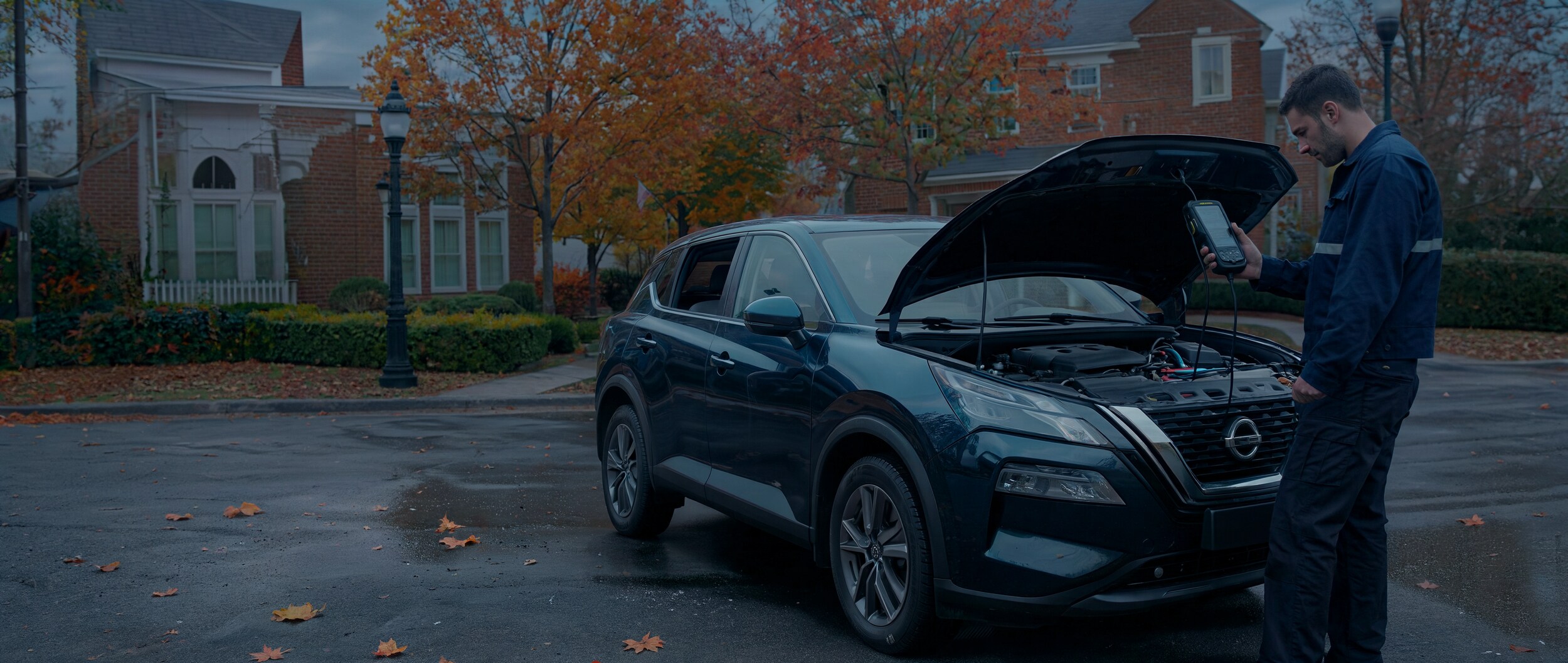
Late November is the right window, and by December it's too late to be comfortable. Birmingham's overnight lows can brush the high 20s well before the month is out, and that temperature floor does real, measurable things to batteries, tire pressure, and engine oil. If you're planning a holiday drive to Nashville, the Gulf Coast, or anywhere in between, the service visit you book this week is the one that actually matters.
- Nissans from 2018 and older are most likely to have a battery approaching or past the 3-to-5-year replacement window. Get a load test before December, not a simple voltage check.
- Tire pressure drops roughly 1 PSI for every 10-degree Fahrenheit temperature decrease; if Birmingham overnight lows swing from the 50s to the high 20s between now and December, you can lose 2 to 3 PSI per tire without touching a thing.
- Nissan specifies 0W-20 full synthetic oil on most models; if you're within range of your next change interval, do it now rather than in mid-January when every shop in town is slammed.
- 2016 to 2019 model years on the Rogue and Altima have documented CVT and transmission control concerns worth verifying are resolved before a long interstate run.
- Late November is Birmingham's last comfortable service window before the holiday travel rush crowds the schedule.
Book your pre-trip service visit at Hallmark Nissan
Which Nissan model years should you prioritize for service right now?
Prioritize the oldest brackets first, though age by itself doesn't settle it, because what really decides the order is how old the vehicle is and which generation's known service patterns apply to it as Birmingham heads into December weather. Not every year carries the same risk. Our service team reads the bracket this way.
| Model Year Range | Battery Risk | Oil Grade | Key Items to Verify | Service Priority |
|---|---|---|---|---|
| 2013-2016 | High (10+ years) | 0W-20 synthetic | Battery load test, coolant concentration, brake fluid age | Highest |
| 2017-2019 | Elevated (7-9 years) | 0W-20 synthetic | Battery load test, CVT fluid (Rogue/Altima), cabin air filter | High |
| 2020-2022 | Moderate (4-6 years) | 0W-20 synthetic | Tire tread depth, battery voltage trend, washer fluid swap | Moderate |
| 2023-2025 | Lower (1-3 years) | 0W-20 synthetic | Tire pressure (cold check), confirm oil interval per schedule | Routine |
A vehicle in the 2013-2016 bracket deserves a close look. At ten or more years old, it almost certainly has a battery that has cycled through Birmingham summers, and it's the summer heat that degrades the cells. The cold just reveals the damage. At 32F, a car battery loses roughly 35 percent of its available cranking strength. If the battery is already operating at 70 percent health due to age, the 32-degree morning math gets unfavorable fast.
Browse the Nissan Rogue lineup
Which years should give you pause before a long December drive?
The 2016 through 2019 model years on the Rogue and Altima carry a documented service history worth knowing before you load the car for a 400-mile round trip, though a well-maintained example in that range can run the interstate just fine. You'll want to verify a few things first.
Rogue (2014-2020 generation). The continuously variable transmission (CVT) on this generation accumulated a notable complaint record, including NHTSA investigations into shuddering, hesitation, and power loss. If the CVT fluid has never been serviced on a vehicle in this range, that's worth addressing now. A long interstate run at highway speeds is exactly the load that stresses a marginal transmission.
Altima (2013-2018 generation). The same CVT platform shows up here. Some 2013-2016 Altimas also logged oil consumption complaints that led owners to run low between changes. If you own one in that window, check the dipstick before the drive and confirm it's current.
What "years to watch" does NOT mean. These vehicles aren't bad choices. Thousands of them run reliably in Birmingham every day. What it means is that specific service items have a higher chance of being overdue on a used vehicle in those ranges, and December is the wrong time to find out.
Pros and Cons of Late-November Service Timing
| Pros | Cons |
|---|---|
| You beat the December scheduling crunch | One more trip to the shop before the holidays |
| Fresh oil through the coldest stretch of the season | Service departments are still booking fast in late November |
| Battery issues caught before they strand you mid-trip | A recently serviced vehicle still needs a tire pressure check on cold mornings |
| Coolant concentration verified before hard freezes | Does not eliminate the need for a quick check the morning of departure |
| Tire tread confirmed before wet December roads | Tread depth you have is the tread depth you get. Service can't add it back |
Which year of Nissan is right for which Birmingham driver right now?
The right year depends less on the badge than on what your December trip asks of the car, so you'll match the service list to your model-year bracket rather than booking a blanket inspection. Each range has one or two items that matter most. Match the list below to how you actually drive.
The 2013-2016 driver. You likely know the vehicle well, and that history is an asset. Have the battery load-tested (the technician measures cranking performance under real load, not resting voltage), confirm the coolant is protecting down to the low 20s, and get a brake fluid check if it's been more than two years. These items don't cost much at service, and the peace of mind on I-20 heading to Atlanta is worth more than the appointment inconvenience.
Drivers in the 2017-2019 range. The battery concern is real but less acute than the older bracket. What matters more here is the CVT fluid on the Rogue or Altima if it hasn't been touched. Transmission fluid service intervals on this generation run longer than you might expect from an older vehicle, which means they can quietly slip past due. Ask the service adviser to pull the history, while you're at it.
If your Nissan is a 2020-2022. Your battery is probably fine, but "probably" isn't a plan. Cold-weather battery performance drops regardless of age. On vehicles in this bracket we see tire pressure that looked good at the September check but now reads 3 to 4 PSI low because of the temperature swing since then. Check pressure cold, before the first morning drive. The placard on your driver's door jamb has the right number, which the sidewall does not.
The 2023-2025 driver. Skip the comprehensive inspection. Confirm your oil interval, swap in winter-rated washer fluid if you haven't, and run the cold tire-pressure check. That's it. You need a few specific verifications done right, nothing more.
Schedule your service appointment at Hallmark Nissan
December traffic is coming for the service bay, so don't wait. Book the visit this week.
Frequently Asked Questions About Service Timing for Nissan Models Before December Trips
Does my Nissan really need service before December, or is this just a sales pitch?
It's a timing question, not a sales pitch. Birmingham's first freeze typically arrives in mid-November, and overnight lows in late November and December can reach the high 20s. Those temperatures do two specific things: they reduce your battery's available cranking power and they drop your tire pressure. Neither of those is a theory. If your Nissan is due for an oil change within the next 2,000 miles, doing it now puts fresh 0W-20 synthetic in the engine before the cold stretch rather than after. The difference matters most on cold-start mornings when oil hasn't yet circulated.
What is the right oil for my Nissan, and does winter change it?
Nissan specifies 0W-20 full synthetic on most models in its lineup, and that specification does not change for winter. The 0W- prefix means the oil flows at zero degrees, which is part of why Nissan chose it as the standard fill. What matters for December is not switching to a different oil type but making sure the oil you have is fresh rather than near the end of its change interval when cold-weather demands are highest on the engine at startup.
How do I know if my battery needs to be replaced before the holidays?
Age is the first indicator. The average automotive battery lifespan is three to five years. If yours is in that window or past it, a load test at service is the only reliable way to assess it. A resting voltage check can show a healthy number on a battery that will fail under the actual cranking demand of a cold morning. The load test applies a real draw to the battery and measures how it responds. That's the check worth requesting before December trips.