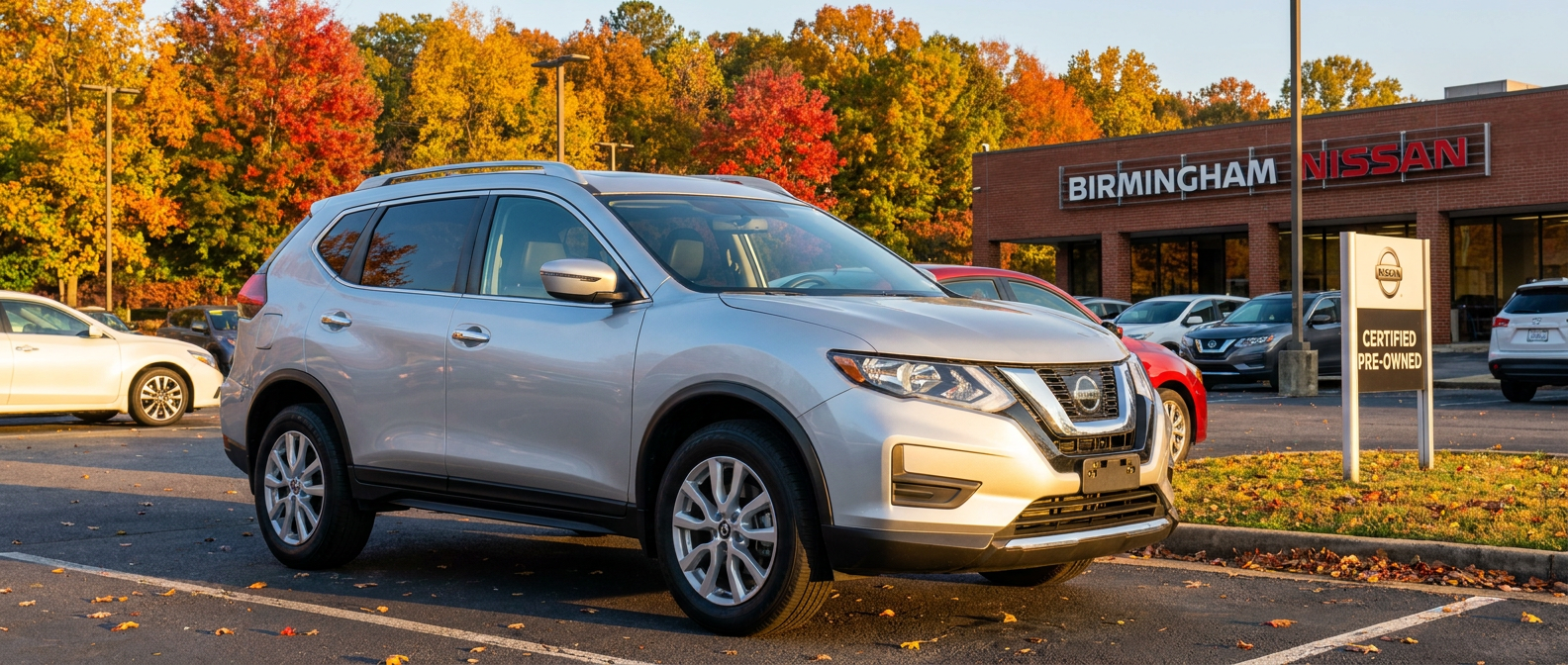
Late October gives you one of the best windows of the year to shop used. Cox Automotive data shows October carries the steepest used-vehicle depreciation of any calendar month, which means dealers are motivated and inventory sits longer. You've got real leverage right now, especially this late in the month. What's less obvious is *which* Nissan years are worth buying, because a run of active NHTSA recalls tied to one engine has reshaped the used-market math on the Rogue and Altima, and most generic shopping guides haven't caught up yet. Our team at Hallmark Nissan will lay it out plainly.
The short version
- Rogue sweet spot: 2019 and 2020 use the naturally aspirated 2.5-liter four-cylinder, completely clear of the active VC-Turbo bearing recall (NHTSA 25V437).
- Rogue years to vet carefully: 2021 through 2025 carry the VC-Turbo engine subject to multiple NHTSA recall campaigns; run the VIN before you buy.
- Altima sweet spot: 2021 through 2023 show among the cleanest federal complaint records in the sixth-generation lineup and run the same unaffected 2.5-liter engine.
- Altima years to skip: 2013 through 2016 logged some of the highest severity-weighted complaint rates on NHTSA record, driven by CVT transmission failures.
- When new wins: The 2027 Rogue brings a genuinely different e-POWER Hybrid powertrain arriving at dealers now. Buying new gets you a clean recall slate and a changed vehicle, not just a refreshed one.
- The October timing: Used demand cools this month. That's real leverage right now.
Which Nissan Model Years Are the Real Sweet Spots?
Nissan's two most popular models split cleanly by engine generation, and once you know which engine you're looking at, you largely know where a given year stands, with the 2019 and 2020 Rogue and the 2021 through 2023 Altima forming the clean windows while the turbo years need a closer look. Know the engine, and you've mostly got your answer.
| Model | Year Range | Engine | Sweet Spot? | Key Consideration |
|---|---|---|---|---|
| Rogue | 2014-2016 | 2.5L NA 4-cyl (2nd gen) | No | High NHTSA complaint volume; inspect CVT history closely |
| Rogue | 2017-2018 | 2.5L NA 4-cyl (2nd gen) | Caution | 609 NHTSA complaints for 2018 alone; transmission scrutiny warranted |
| Rogue | 2019-2020 | 2.5L NA 4-cyl (3rd gen) | Yes | Cleanest third-generation window; no VC-Turbo recall exposure at all |
| Rogue | 2021-2025 | 1.5L VC-Turbo 3-cyl | Proceed carefully | Active NHTSA recalls 25V437, 26V080, 26V081; VIN check required |
| Altima | 2013-2016 | 2.5L / 2.0T 4-cyl | No | Up to 2,303 NHTSA complaints for 2013; severe CVT and steering complaint rates |
| Altima | 2017-2018 | 2.5L NA 4-cyl | Improving | Much quieter federal record than the preceding years |
| Altima | 2019-2020 | 2.5L / 2.0T VC-Turbo | Caution | 2.0T VC-Turbo trim included in recall 25V437; confirm engine before buying |
| Altima | 2021-2023 | 2.5L NA 4-cyl | Yes | Among the quietest complaint records in the sixth-generation run |
See our current pre-owned Nissan inventory to check what's on the lot today.
Which Years Should You Actually Watch Out For?
A handful of Rogue and Altima years carry active recalls you'll want to vet before buying, and this is where the recall story turns concrete rather than landing as a generic disclaimer, with the turbo years needing a VIN check and the naturally aspirated years sitting clear. Run the VIN, and you'll know which bucket a car falls into.
Per NHTSA recall 25V437 (issued June 2025), Nissan recalled 443,899 vehicles, including 2021 through 2024 Rogue models equipped with the 1.5-liter VC-Turbo three-cylinder engine, for engine bearing defects that can lead to engine failure while driving. We'd call that more than a minor software tweak. NHTSA campaign 26V080 (February 2026) followed, covering 2023 through 2025 Rogue models with the same engine for engine bearing seizure triggered by oil temperature issues. Campaign 26V081 (also February 2026) added 2024 and 2025 Rogue models for broken throttle body gears, affecting 318,781 vehicles.
On the Altima side, the 2019 and 2020 models equipped with the 2.0-liter VC-Turbo four-cylinder land in recall 25V437 as well. Altimas from those years running the standard 2.5-liter engine stay unaffected.
- None of this makes those vehicles unbuyable.
- Nissan performs the ECM software fix at no charge.
- The move is simple. Verify the VIN on NHTSA.gov before you sign anything.
- A vehicle where the recall remedy is already complete is a different situation than one sitting with an open campaign.
The older Altima story is harder to walk back. NHTSA records show the 2013 Altima generated 2,303 owner complaints, 810 of them classified as severe, across 12 recall campaigns for that model year alone. Move up a year and the 2014 Altima logged 1,110 complaints and 8 campaigns. Those years carry documented CVT failure patterns that cost real money to address, and we'd rather you hear it from us now than run into it after you've bought.
View the current Nissan Altima lineup if you want to compare what new looks like.
See current Rogue inventory and trims here before you finalize a used target.
Before you buy any used Nissan: Pull the VIN on NHTSA.gov to confirm recall completion status. Check for maintenance records that show CVT fluid service history. A gap there on any CVT-equipped model is worth probing, and a third-party pre-purchase inspection is worth the cost on any used vehicle, regardless of model year or condition claim.
Which Year Fits Which Birmingham Buyer?
Each window fits a different Birmingham buyer, so rather than rank these years, we'll describe who each one actually suits and where the honest tradeoff lands, from the 2019 and 2020 Rogue to the 2021 through 2023 Altima to a brand-new Rogue off the truck. We're not ranking them, just sorting them by fit.
The 2019-2020 Rogue buyer wants a third-generation Rogue (a meaningfully better vehicle than the second-gen in ride quality, interior space, and safety tech) without any VC-Turbo recall uncertainty hanging over it. The naturally aspirated 2.5-liter in those years is proven and clear of all three active recall campaigns, which is a real and specific advantage. The tradeoff is age. These vehicles are now six to seven years old, so you're working with higher-mileage examples, and the cabin tech sits a step behind the current generation's 12.3-inch touchscreen and wireless Apple CarPlay. If that matters to you, weigh it.
The 2021-2023 Altima buyer wants a fuel-efficient sedan with low day-to-day ownership friction. The EPA rates the FWD 2.5-liter Altima at 26 city and 36 highway, a useful number for Birmingham commuters running regular stretches of I-65 or I-20. Inside, the sixth-generation cabin offers 43.8 inches of front legroom, comfortable for taller drivers, and the standard front Zero Gravity seats hold up well on longer hauls. These years sit in a quiet stretch of the NHTSA complaint record, and the 2.5-liter engine stays untouched by any of the VC-Turbo recall activity.
The new-Rogue buyer has a real argument right now.
- Clean recall slate from day one
- Full current tech package (12.3-inch touchscreen, wireless Apple CarPlay, advanced driver aids)
- e-POWER hybrid powertrain that's a real departure from the 2021-2025 generation
- Smoother acceleration and quieter operation than the outgoing VC-Turbo configuration
The tradeoff is straightforward. More of your money goes into the vehicle on day one. But if you want the recall history on the intermediate years gone as a variable, new removes it entirely.
The end-of-October buyer in general is working with real market timing. Edmunds points to October and November as the peak discount window for used inventory, as year-end new-car promotions pull some shoppers toward new vehicles and ease demand for used ones. Inventory that's sat on a lot longer is negotiable, especially this late in the month. If you've got flexibility on the exact trim or year, that flexibility means something right now, so use it while you have it.
Frequently Asked Questions
Are 2021 through 2024 Nissan Rogues safe to buy used right now?
They can be, but VIN verification isn't optional. NHTSA recall 25V437 covers 2021 through 2024 Rogue models with the 1.5-liter VC-Turbo engine for engine bearing defects that can lead to engine failure. NHTSA 26V080 (February 2026) covers 2023 through 2025 Rogue models for a related oil-temperature-triggered bearing seizure issue. The remedy for both is an ECM software reprogram, with engine repair or replacement if metal debris is found, performed at no charge. A vehicle where that work is documented and complete is a different risk profile than one with an open recall. Pull the VIN at NHTSA.gov first.
Which Nissan Altima years should I avoid entirely?
Based on NHTSA federal complaint and recall data, the 2013 through 2016 Altima years carry the highest severity-weighted complaint rates in the model's history, driven by CVT transmission failures. The 2013 Altima alone generated 2,303 complaints on federal record, 810 classified as severe, across 12 recall campaigns. The 2014 and 2015 Altima follow a similar pattern with complaint totals in the hundreds and multiple recall campaigns each. We'd steer most buyers away from those years unless the vehicle has exceptional service documentation and has been through a third-party inspection. The 2021 through 2023 window is a much cleaner place to start.
Is late October actually a good time to buy a used car in Birmingham?
The data supports it. Cox Automotive tracking shows October historically delivers the steepest used-vehicle depreciation of any month in the calendar year, as dealers slow down heading into winter and new model-year inventory fills their lots. Edmunds similarly points to October and November as the best months for used-car discounts, and separately notes that year-end new-car promotions pull some buyers away from the used market, easing competition for the buyers who remain. If you've been waiting for the right moment to move on a used Nissan, this window is genuine.
Categorías:
Social