

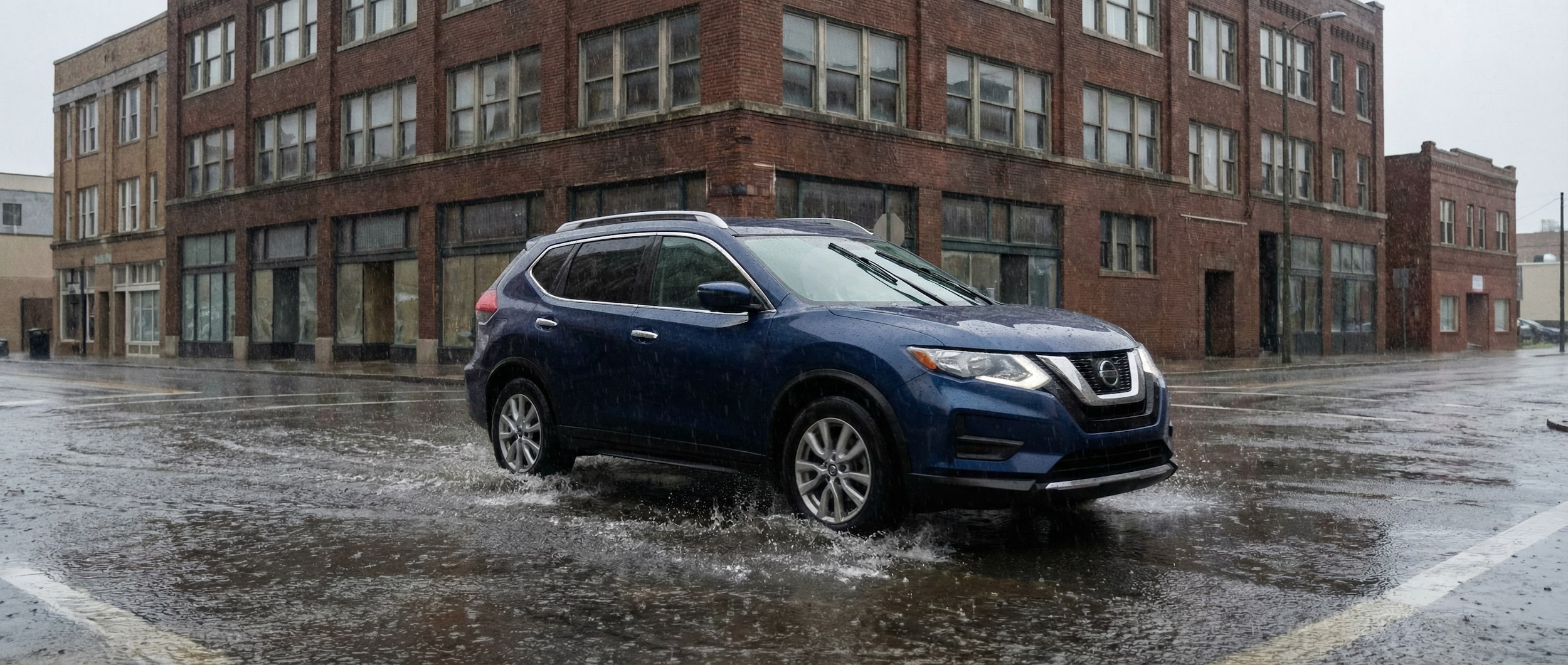
Standing water kills more engines in Birmingham, AL than any other weather-related cause - and most damage happens in less than 12 inches of water. With our city's notorious flash flooding along Highway 280 and sudden downpours that overwhelm drainage systems near Railroad Park, knowing how to protect your Nissan® during flood conditions can save you thousands in repairs. Whether you're navigating the low-lying areas near the Cahaba River or caught in a sudden storm while shopping at The Summit, these critical mistakes could mean the difference between driving home safely and calling for a tow truck.
The Hidden Danger Zone: Where Birmingham Streets Flood First
Your Nissan's air intake sits just 15-20 inches off the ground - lower than you might think - making even moderate flooding a serious threat to your engine. During Birmingham's intense summer storms, certain areas become danger zones within minutes. The underpass at 20th Street and Morris Avenue regularly collects 18-24 inches of water, while the intersection near UAB Hospital floods faster than city pumps can handle.
Low-lying areas throughout Jefferson County pose particular risks:
- Valley Avenue near Sloss Furnaces
- Sections of Highway 31 in Homewood
- The Greensprings Highway dip near Red Mountain
- Multiple spots along Lakeshore Drive
- Areas near Five Points South during heavy rain
Understanding your vehicle's ground clearance matters here. The Nissan Altima sits approximately 5.4 inches off the ground, while the Rogue offers 8.2 inches. Even the Pathfinder, with its 8.1 inches of clearance, can't safely navigate water deeper than its wheel wells.
Did you know? A single cup of water sucked into your engine through the air intake can cause hydrolocking - instant engine failure requiring complete rebuild or replacement.
Critical Mistakes That Destroy Engines in Seconds
The most expensive mistake happens when drivers maintain speed through standing water, creating a bow wave that pushes water directly into the air intake. This wave effect means even 6 inches of water becomes dangerous at 25 mph. Your engine can't compress water like it does air - the result is bent connecting rods, cracked engine blocks, and repair bills exceeding $8,000.
| Water Depth | Safe Speed | Risk Level | Potential Damage |
|---|---|---|---|
| 0-4 inches | 5 mph max | Low | Brake contamination |
| 4-8 inches | Do not enter | High | Electrical damage, stalled engine |
| 8-12 inches | Never attempt | Extreme | Engine hydrolock, transmission failure |
| 12+ inches | Vehicle will float | Total loss | Complete vehicle damage |
Beyond the engine, water infiltrates critical components within seconds. Your Nissan's computer modules, located under seats and behind kick panels, fail immediately when submerged. The catalytic converter cracks from thermal shock when hot metal meets cold water. Differentials and transmissions take in water through breather tubes, contaminating fluids and destroying internal components.
The automatic engine stop-start system in newer models like the Sentra creates additional risks - if the engine shuts off in water, restarting becomes impossible and dangerous.
Your Nissan's Flood Defense Systems (And Their Limits)
Modern Nissans include several features that help in wet conditions, but none protect against deep water infiltration. The Vehicle Dynamic Control system helps maintain traction on wet roads, while features like Hill Start Assist prevent rollback on flooded inclines. However, these systems have clear limitations when water depth exceeds safe levels.
The Intelligent All-Wheel Drive available in the Rogue and Murano redistributes power when detecting wheel slip, helpful for maintaining control on wet surfaces. But this technology can't prevent water from entering the engine or electrical systems. Even the Armada's robust 4WD system with electronic locking differential won't protect critical components from flood damage.
Electronic Systems at Risk:
- Blind Spot Warning sensors (mounted low on bumpers)
- Parking sensors and cameras
- Intelligent Around View Monitor components
- ProPILOT Assist radar units
- Intelligent Forward Collision Warning systems
Water damages these sensors permanently, with replacement costs ranging from $500-2,000 per component. The main engine computer, typically located beneath the passenger seat, fails instantly when submerged.
The 30-Second Safety Check Before Entering Water
Never enter standing water without this rapid assessment. First, watch another vehicle of similar height navigate the area - if they struggle or stall, find another route. Check for moving water, which is exponentially more dangerous than standing water. Look for visual references like curbs, fire hydrants, or familiar landmarks to gauge actual depth.
Pre-Entry Checklist:
- ✓ Confirm water depth is less than 4 inches
- ✓ Identify exit route if conditions worsen
- ✓ Turn off automatic stop-start if equipped
- ✓ Switch A/C to recirculate mode
- ✓ Close all windows completely
- ✓ Maintain steady 3-5 mph speed
If you must proceed, enter slowly in first gear (or Low for automatics), maintaining steady throttle without acceleration. The moment you feel the engine hesitate, water touch the floorboards, or lose clear visibility - stop immediately and reverse if possible.
Pro tip: The old rule about water reaching your hubcaps? Ignore it. By then, you're already risking major damage. If water touches your door sills, you've gone too far.
Roads around Vestavia Hills and Mountain Brook flood differently than downtown Birmingham streets. Elevation changes create rushing water that can push vehicles off the road in seconds. Never attempt to cross moving water, regardless of depth.
After the Flood: Damage Control Steps
If water entered your vehicle, acting within the first 24 hours prevents catastrophic damage from spreading. Water begins corroding electrical connections immediately, while contaminated fluids destroy transmissions and differentials within days. Even if your Nissan seems to run normally after water exposure, hidden damage compounds quickly.
Immediate Actions Required:
- Do not start the engine if it stalled in water
- Disconnect the battery to prevent electrical shorts
- Document everything with photos for insurance
- Check all fluids for contamination (milky appearance = water)
- Remove floor mats and carpeting to begin drying
- Open all doors and windows in a secure location
The multi-point inspection should include checking the air filter - if wet, water likely entered the engine. Transmission fluid appearing pink or foamy indicates water contamination requiring immediate flush. Brake fluid absorbs water readily, compromising stopping ability even after the flood.
Professional inspection remains critical even for minimal exposure. Water trapped in hidden areas causes mold growth, electrical failures, and rust spreading through the frame. Many flood-damaged vehicles develop problems months later when corrosion finally causes component failure.
Comprehensive insurance typically covers flood damage, but only if you didn't intentionally drive into known flooding. Document the unexpected nature of the flooding and your attempts to avoid it. Take photos of water levels, street conditions, and any warning sign absence.
Common Questions About Birmingham Flooded-Street Caution
How deep can my Nissan Frontier safely drive through water?
The Nissan Frontier can safely navigate water up to 4-6 inches deep when moving at walking speed. Despite having higher ground clearance than sedans, the Frontier's air intake and critical electronics remain vulnerable to water damage at depths exceeding half the wheel height. Always assess conditions carefully and never attempt water crossings where the bottom isn't visible.
What areas in Birmingham, AL flood most often during heavy rain?
Birmingham's most flood-prone areas include the Highway 280 corridor through Homewood, underpasses downtown near the BJCC, and low spots along Valley Avenue. The Cahaba River area floods rapidly during storms, while sections of Highway 31 and Lakeshore Parkway regularly experience dangerous standing water. Mountain Brook's Old Leeds Road and several Irondale intersections also flood frequently during heavy downpours.
Does Nissan's warranty cover flood damage to my vehicle?
Nissan's manufacturer warranty does not cover flood damage, as this falls under environmental damage rather than defects. Comprehensive auto insurance typically covers flood damage if you didn't intentionally drive into deep water. Document all circumstances surrounding the flooding and contact your insurance provider immediately after any water exposure to your vehicle.
What's the first thing I should do if my Nissan stalls in flood water?
If your Nissan stalls in flood water, do not attempt to restart the engine - this could cause catastrophic damage. Instead, shift to neutral, safely exit if possible, and call for professional towing to prevent further damage. Once safe, disconnect the battery and document the incident thoroughly for insurance purposes while avoiding any attempt to start the vehicle.
Can I drive my Nissan Leaf through flooded streets in Birmingham?
The Nissan Leaf requires extra caution in flooded conditions due to its high-voltage battery system located under the vehicle. While the battery has protective shielding, never drive through standing water deeper than 3-4 inches. Water contact with electrical components poses serious safety risks beyond typical engine damage, making flood avoidance even more critical for electric vehicles.
Where can I get my Nissan inspected after driving through flood water?
After any flood water exposure, have your Nissan professionally inspected immediately to check for hidden damage. Critical inspection points include the engine air intake, transmission fluid, differential fluid, brake system, and all electrical connections. Early detection of water contamination can prevent expensive failures and ensure your vehicle remains safe to operate.
Protecting Your Investment Through Birmingham's Storm Season
Flash floods in Birmingham, AL strike without warning, transforming familiar streets into dangerous waterways within minutes. Your split-second decisions during these moments determine whether you drive home safely or face thousands in repair costs. Remember that no destination is worth risking your Nissan's engine - when you see standing water ahead, choosing an alternate route always beats gambling with flood damage.
Stay informed about weather conditions before traveling, especially during our heavy rain months from March through September. Keep emergency supplies in your vehicle and know your alternate routes when regular paths flood. Most importantly, respect the power of moving water and trust your instincts when conditions seem dangerous.
For those whose vehicles have encountered flood water, even minimal exposure warrants professional inspection. Hidden moisture causes expanding damage over time, and early intervention prevents costlier repairs later. The service experts at Hallmark Nissan understand our local flood risks and can thoroughly inspect your vehicle for water-related damage, ensuring your safety and protecting your investment through every storm season.
Categories:
Social