

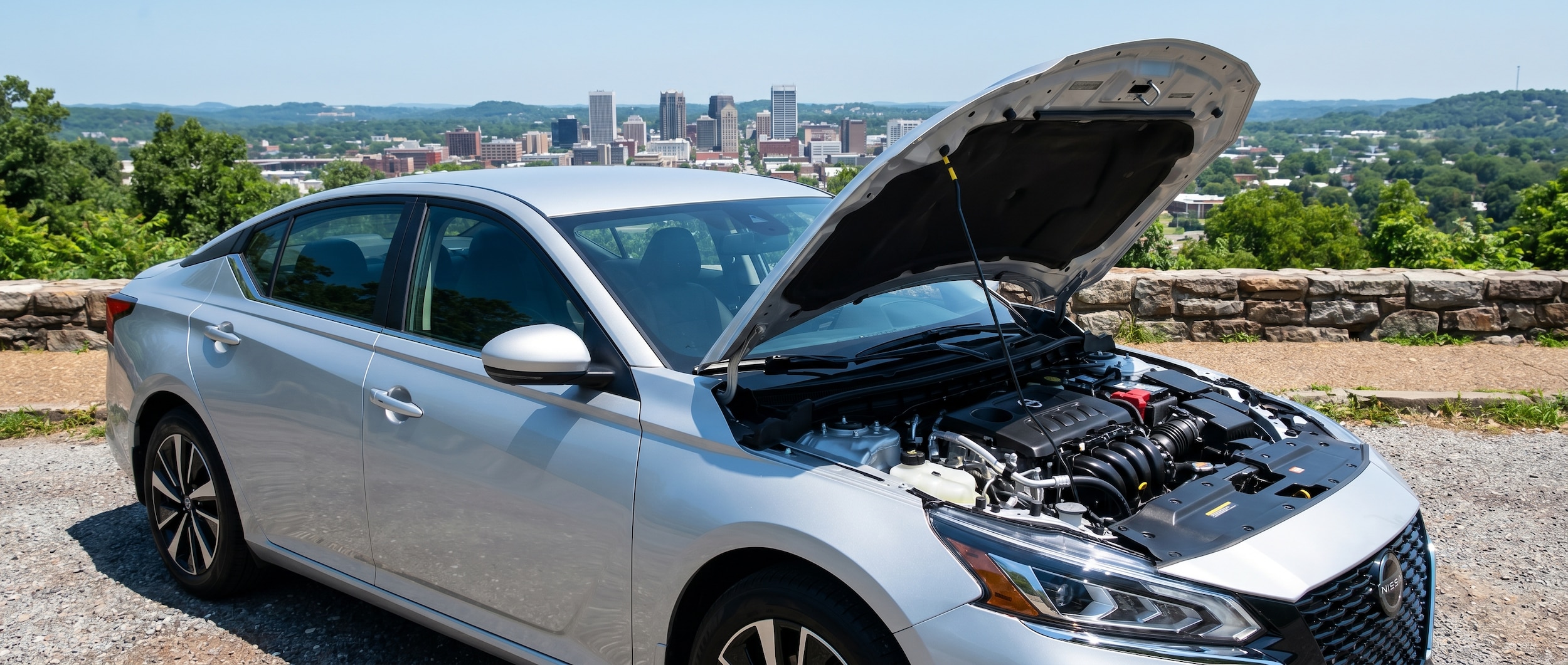
Modern cooling systems handle 4,500 BTUs of heat per minute during Alabama summer driving - roughly the same heat output as two residential furnaces running full blast. For Nissan Altima owners in Birmingham, AL, understanding your cooling system isn't just about preventing breakdowns; it's about maintaining optimal performance when temperatures soar above 95°F and humidity makes every commute feel like a steam bath. This guide breaks down exactly how your Altima's cooling system works, what maintenance it needs, and how to spot problems before they leave you stranded on I-65 during rush hour.
How Your Altima's Cooling System Battles Alabama Heat
Your Altima's engine operates at 195-220°F internally, while Birmingham summer temperatures can push ambient air above 100°F - creating a temperature differential your cooling system must constantly manage.
The system starts with coolant (a 50/50 mix of antifreeze and water) that absorbs heat from engine components. This heated coolant flows through the radiator, where air movement dissipates the heat. Your water pump keeps this cycle moving at 15-20 gallons per minute at highway speeds.
Did you know? The Altima's cooling system removes enough heat in one hour of summer driving to boil 40 gallons of water completely dry.
What makes the Altima particularly well-suited for Southern heat is its dual-fan cooling design. When you're stuck in traffic near the Birmingham-Jefferson Convention Complex or crawling through construction zones, the electric fans maintain airflow even without vehicle movement. The larger primary fan handles normal cooling, while the secondary fan kicks in during extreme conditions or when running the air conditioning at full blast.
The pressure cap plays a critical but often overlooked role. By maintaining 13-16 PSI of system pressure, it raises the coolant's boiling point from 212°F to approximately 250°F. This pressure buffer prevents coolant from boiling during those steep climbs up Red Mountain or when towing cargo to Smith Lake.
Critical Components That Keep Your Altima Cool
Understanding each component helps you recognize problems early and communicate effectively with service technicians.
The RadiatorYour Altima's crossflow aluminum radiator features densely packed fins that maximize heat dissipation. These delicate fins bend easily from road debris or pressure washing, reducing cooling efficiency by up to 30%.
Thermostat OperationThe thermostat acts as your cooling system's gatekeeper, remaining closed until coolant reaches 180-195°F. This ensures your engine reaches optimal operating temperature quickly, improving fuel economy and reducing wear. A stuck-open thermostat causes poor heating and increased fuel consumption, while a stuck-closed thermostat leads to overheating.
| Component | Function | Common Failure Signs | Typical Lifespan |
|---|---|---|---|
| Water Pump | Circulates coolant at 15-20 GPM | Coolant leaks, whining noise, overheating | 60,000-90,000 miles |
| Radiator Hoses | Transport coolant between components | Soft spots, cracks, bulging | 4-5 years |
| Coolant Reservoir | Maintains proper fluid level | Cracks, discoloration, low fluid | 100,000+ miles |
| Radiator Cap | Maintains system pressure | Coolant loss, overheating, hose swelling | 5-7 years |
The Altima uses temperature sensors to control fan operation. The primary fan activates around 200°F, while the secondary fan engages at 212°F or when AC demands additional cooling. Failed fans often go unnoticed during highway driving but cause overheating in stop-and-go traffic.
Regular inspection of these components during routine maintenance helps catch problems before they escalate into roadside emergencies.
Summer Maintenance Schedule for Birmingham Drivers
Alabama's combination of high heat, humidity, and pollen creates unique challenges for cooling system maintenance.
Monthly Checks During Summer- Coolant level in the overflow reservoir (check when engine is cold)
- Visual inspection for leaks under the vehicle
- Radiator fin condition and debris removal
- Belt tension and condition
Professional cooling system service should include pressure testing, thermostat operation verification, and coolant condition analysis. Birmingham's oak and pine pollen can clog radiator fins by May, reducing cooling efficiency just when you need it most.
Pro tip: Schedule cooling system service in April before Alabama's heat peaks. This timing allows shops to address issues before the demanding summer months.
Coolant Replacement Intervals
Nissan recommends coolant replacement every 60,000 miles or 4 years for the Altima. However, vehicles frequently driven in stop-and-go traffic or used for towing may benefit from 30,000-mile intervals. The service team evaluates coolant condition using test strips that measure pH levels and corrosion inhibitor concentration.
Local driving conditions significantly impact maintenance needs:
- Frequent short trips prevent the engine from reaching full operating temperature
- Extended idling in traffic accelerates coolant breakdown
- Dusty conditions from construction zones clog radiator fins
- High humidity promotes corrosion in aluminum components
Warning Signs Your Altima's Cooling System Needs Attention
Early problem detection prevents costly repairs and dangerous situations.
Temperature Gauge ReadingsYour Altima's temperature gauge should remain centered during normal operation. Movement toward the red zone indicates developing problems. Fluctuating readings often signal air pockets in the system or a failing thermostat.
Visual and Audible Warnings- Green or orange puddles under your vehicle indicate coolant leaks
- Sweet smell inside the cabin suggests heater core leakage
- White exhaust smoke signals potential head gasket failure
- Grinding or whining from the engine bay indicates water pump bearing wear
Overheating affects engine performance before triggering warning lights. You might notice:
- Reduced power during acceleration
- Engine knocking or pinging sounds
- Automatic transmission shifting irregularly
- Air conditioning performance degrading
Some cooling system problems develop gradually:
- Slow coolant loss without visible leaks (internal consumption)
- Gradual efficiency reduction from fin damage
- Intermittent overheating only under specific conditions
- Coolant discoloration indicating corrosion
Taking action at the first sign of trouble typically costs 75% less than waiting for complete failure. A $200 water pump replacement beats a $4,000 engine replacement every time.
Birmingham-Specific Cooling Challenges and Solutions
Local geography and climate create unique stresses on your Altima's cooling system.
Rush Hour RealitiesStop-and-go traffic on I-459 or Highway 280 during summer afternoons tests cooling systems severely. Your engine generates maximum heat while receiving minimal airflow. Combat this by:
- Maintaining proper coolant levels
- Ensuring electric fans operate correctly
- Using AC moderately in extreme traffic
Driving from downtown Birmingham to areas like Vestavia Hills involves significant elevation changes. Climbing grades increases engine load and cooling system demand. The Rogue and Pathfinder handle these conditions with larger cooling capacity, but your Altima manages well with proper maintenance.
| Local Driving Scenario | Cooling System Impact | Preventive Action |
|---|---|---|
| I-65 construction zones | Extended idling, debris exposure | Check fans monthly, clean radiator |
| Mountain Brook hills | Increased engine load | Monitor temp gauge on climbs |
| Lake Purdy recreation | Dusty/sandy conditions | Inspect and rinse radiator fins |
| UAB campus traffic | Frequent stops and starts | Ensure coolant level stays full |
Birmingham's weather can swing 40 degrees in a single day during spring and fall. These temperature variations stress cooling system components through repeated expansion and contraction. Regular pressure testing catches developing leaks before they become failures.
Pollen Season ImpactApril through June brings heavy pollen that creates a yellow film on radiators. This coating reduces heat transfer efficiency by up to 20%. Monthly radiator cleaning during pollen season maintains proper cooling performance.
Professional Service vs. DIY Maintenance
Understanding what you can safely handle versus what requires professional equipment protects both you and your Altima.
Safe DIY Tasks:- Checking coolant levels
- Visual leak inspections
- Cleaning radiator fins with low-pressure water
- Monitoring temperature gauge readings
- Basic hose and belt inspections
- Pressure testing the cooling system
- Coolant flushes with proper disposal
- Water pump replacement
- Thermostat testing and replacement
- Radiator repairs or replacement
Professional shops use specialized equipment:
- Pressure testers identify leaks at 16 PSI
- Refractometers measure exact coolant concentration
- Combustion leak detectors find head gasket problems
- Infrared thermometers verify thermostat operation
Attempting complex repairs without proper tools often causes more damage. A professional technician can diagnose and repair cooling issues efficiently, often identifying related problems before they worsen.
Common Questions About Nissan Altima Cooling Systems in Birmingham, AL
How often should I check my Altima's coolant level in Alabama summers?
Check your Altima's coolant level every two weeks during Birmingham's summer months (May through September). The extreme heat and frequent air conditioning use put additional strain on the cooling system, making regular monitoring essential for catching small leaks before they become major problems.
What type of coolant should I use in my Nissan Altima?
Use Nissan Long Life Antifreeze/Coolant (blue) or an equivalent that meets Nissan specifications for your Altima. The proper 50/50 mixture with distilled water provides freeze protection to -34°F and boil-over protection to 265°F with a 16 PSI cap.
Can Birmingham's hard water affect my Altima's cooling system?
Yes, Birmingham's moderately hard water contains minerals that can form deposits in your cooling system over time. Always use distilled water when adding coolant or performing flushes to prevent mineral buildup that reduces cooling efficiency and damages water pump seals.
Why does my Altima's temperature gauge fluctuate in stop-and-go traffic?
Temperature fluctuations in Birmingham traffic typically indicate air pockets in the cooling system or a sticking thermostat. The constant speed changes on Highway 280 or I-459 reveal cooling system problems that highway driving might mask.
Should I worry if my Altima's cooling fans run after turning off the engine?
Cooling fans running for 2-5 minutes after shutdown is normal, especially after driving in Birmingham's summer heat. The fans remove residual heat to prevent heat soak damage. Fans running longer than 10 minutes may indicate a sensor problem.
What's the average cost of cooling system repairs for an Altima in Birmingham, AL?
Cooling system repair costs in Birmingham range from $150 for basic service to $800 for radiator replacement. Simple maintenance like coolant flushes average $120-150, while water pump replacement typically runs $400-600 including parts and labor.
Keep Your Altima Running Cool This Summer
Your Nissan Altima's cooling system works hardest during Alabama summers, making preventive maintenance essential for reliability. By understanding how each component functions and recognizing early warning signs, you protect your investment and avoid inconvenient breakdowns. Whether navigating construction on I-20/59 or climbing the hills around Hoover, a properly maintained cooling system ensures comfortable, worry-free driving.
The key to cooling system longevity lies in consistent attention to small details - checking fluid levels, cleaning radiator fins, and addressing minor leaks promptly. Combined with professional service at recommended intervals, these simple steps keep your Altima performing reliably through Birmingham's hottest days. Ready to ensure your Altima stays cool this summer? The experienced technicians at Hallmark Nissan understand exactly what your cooling system needs to handle Alabama heat.
Categories:
Social