

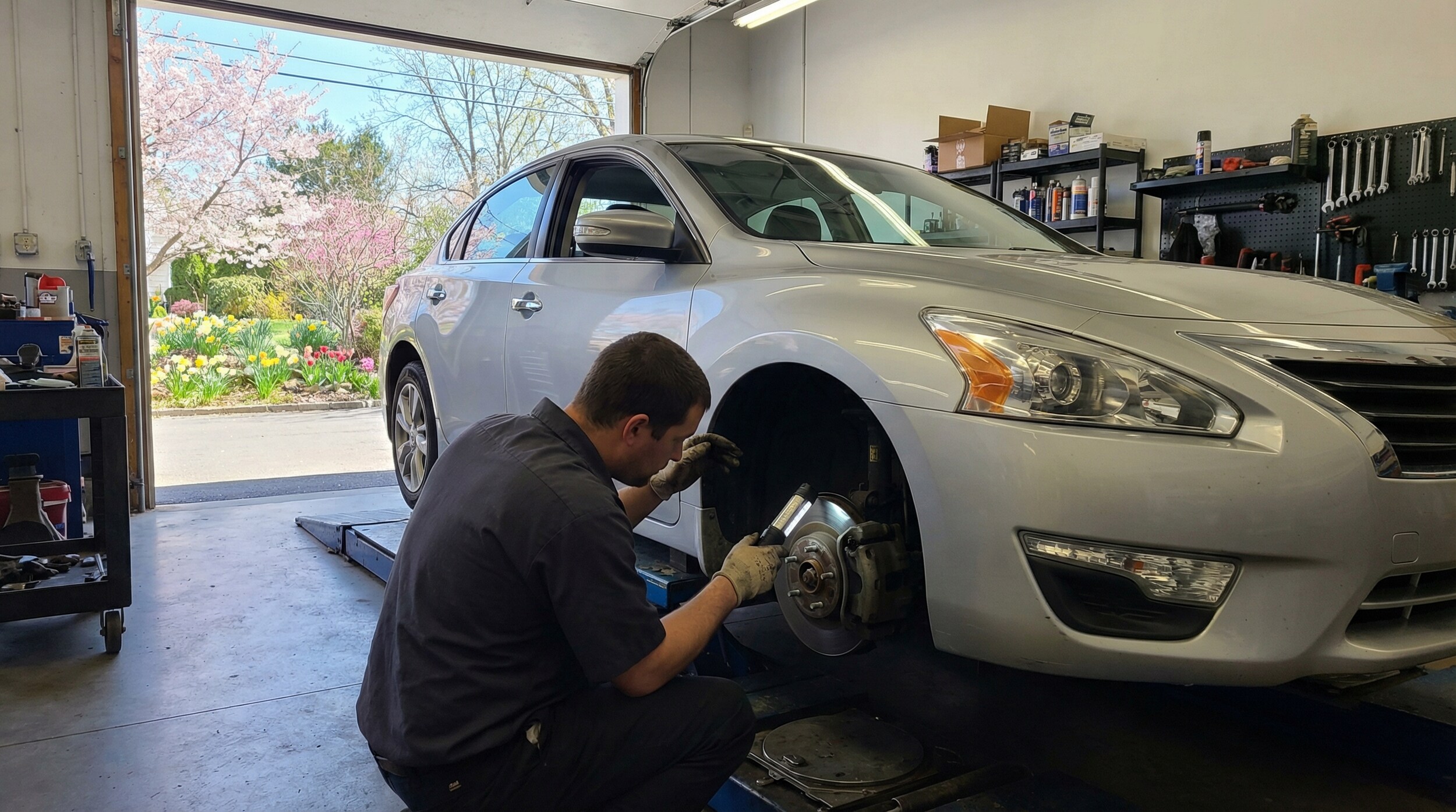
Spring pollen isn't the only thing affecting your Nissan’s performance in Birmingham, AL - that squealing sound from your brakes signals it's time for attention. After months of winter driving through Alabama's unpredictable weather, your brake system accumulates moisture, road grime, and debris that creates that distinctive spring squeal many drivers notice around this time of year. Understanding when to address brake noise versus when it's normal helps you maintain your vehicle's safety while avoiding unnecessary service visits.
Why Nissan Brakes Develop Spring Squealing
Your brake pads contain a small metal wear indicator that creates an audible warning when they reach about 3mm thickness - but that's not the only reason for spring brake noise. Winter moisture combines with road salt from those occasional icy Birmingham mornings to create surface rust on your brake rotors. This rust buildup happens even during mild Alabama winters, especially if your Sentra or Altima sits unused for several days during cold snaps.
The transition from winter to spring brings temperature fluctuations that affect brake components differently. Metal expands and contracts, creating tiny gaps where moisture and debris accumulate. When you first apply your brakes after a cool, damp night near Red Mountain, that surface rust scrapes away, producing a grinding or squealing sound that usually disappears after a few brake applications.
Did you know? Nissan uses semi-metallic brake pads on most models, which are more prone to surface rust but provide better stopping power and heat dissipation - perfect for navigating Birmingham's hilly terrain.
Birmingham's unique geography contributes to brake wear patterns. The constant elevation changes between downtown and areas like Vestavia Hills mean your brakes work harder than in flatter regions. This creates specific wear patterns that experienced technicians recognize immediately.
Distinguishing Normal Sounds from Warning Signs
Light squealing that disappears after your morning commute down Highway 280 typically indicates harmless surface rust. This sound occurs most often after rain, heavy dew, or when humidity levels spike - common conditions throughout Alabama's spring season. Your Rogue or Murano might produce these sounds for the first few stops, then operate silently once the rust layer wears away.
Warning signs that require immediate attention include:
- Grinding sounds that persist throughout your drive
- Vibration in the brake pedal when stopping
- Pulling to one side during braking
- Increased stopping distance
- Brake pedal feels soft or sinks to the floor
- Squealing that gets progressively louder
| Sound Type | Typical Cause | Action Required |
|---|---|---|
| Light morning squeal | Surface rust | Monitor - usually normal |
| Persistent high-pitch squeal | Wear indicators | Schedule inspection within 2 weeks |
| Grinding/metal-on-metal | Worn pads | Service immediately |
| Intermittent chirping | Glazed pads or dust | Professional cleaning |
| Pulsating with vibration | Warped rotors | Rotor service needed |
These distinctions matter because Birmingham's varied driving conditions - from stop-and-go traffic on I-65 to steep grades near Shades Mountain - can accelerate certain types of brake wear while leaving others unaffected.
Spring Brake Maintenance Schedule for Birmingham Drivers
March through May presents ideal conditions for brake service in Birmingham, AL. The moderate temperatures allow thorough inspections without the extreme heat of summer or unexpected cold snaps of winter. Spring service also prepares your brakes for summer road trips to Gulf Shores or mountain drives through Cheaha State Park.
Recommended Spring Brake Service Timeline:
- Every 5,000 miles: Brake inspection during tire rotation
- Every 15,000 miles: Brake cleaning and adjustment
- Every 25,000-35,000 miles: Brake pad replacement (varies by driving style)
- Every 50,000-70,000 miles: Brake rotor replacement or resurfacing
- Every 2 years: Brake fluid flush
Drivers who frequently navigate downtown Birmingham's steep hills or tow boats to Logan Martin Lake should follow the lower end of these intervals. Your Frontier or Pathfinder works harder in these conditions, generating more heat and wear in the brake system.
Consider scheduling your spring brake service during Birmingham's pollen season. While your vehicle is in for service, technicians can also clean pollen from crucial cooling systems, preventing overheating issues common in Alabama's humid summers.
Local Factors Affecting Nissan Brake Performance
Birmingham's red clay soil creates unique challenges for brake systems. During spring rains, this fine dust becomes airborne and settles on brake components. Unlike regular road dust, red clay particles are extremely fine and slightly acidic, accelerating corrosion on exposed metal surfaces. Regular cleaning prevents this buildup from embedding in your brake pads.
The humidity levels around areas like the Cahaba River and Ruffner Mountain Nature Preserve average 70-80% during spring mornings. This moisture penetrates brake components overnight, explaining why many Birmingham drivers notice more brake noise during their morning commute than afternoon drives. Your Leaf or Kicks might sound different parked overnight in Mountain Brook versus Irondale due to micro-climate variations.
Pro tip: Park in a garage when possible during Birmingham's humid spring nights to reduce moisture accumulation on brake components.
Temperature swings between 40°F mornings and 75°F afternoons stress brake materials. Modern Nissan brake systems handle these variations well, but older components may develop stress cracks or accelerated wear. Regular inspections catch these issues before they compromise safety.
Local driving patterns also matter. The constant acceleration and braking required on Highway 31 through Homewood creates different wear than steady-speed driving on I-459. Technicians familiar with Birmingham traffic patterns can spot these wear indicators and recommend appropriate service intervals for your specific routes.
Professional Service vs. Visual Inspection
Visual brake inspections reveal obvious issues but miss critical problems hidden within the system. While checking your brake pads through the wheel spokes provides basic information, professional inspections measure rotor thickness, check for even pad wear, test brake fluid quality, and evaluate the entire hydraulic system.
What You Can Check:
- Brake pad thickness (should be at least 1/4 inch)
- Obvious fluid leaks around wheels
- Brake fluid level in reservoir
- Unusual odors after driving
- Visual rotor condition through wheel spokes
What Professionals Evaluate:
- Precise pad thickness measurements
- Rotor thickness and run-out
- Caliper operation and sliding pins
- Brake hose condition and flexibility
- Electronic brake system sensors
- Brake fluid moisture content
Birmingham's spring weather creates ideal conditions for thorough brake system evaluation. The moderate temperatures allow accurate measurements without thermal expansion affecting results. Professional technicians also understand how local conditions affect specific Nissan models - your Armada’s heavy-duty brake system requires different evaluation criteria than your Versa’s compact setup.
Modern diagnostic equipment detects issues before they become safety concerns. Electronic brake wear sensors on newer Nissan models provide early warning, but these systems require professional scanners to interpret correctly. What seems like a simple sensor light might indicate anything from low fluid to ABS system problems.
Common Questions About Spring Brake Squeal in Birmingham, AL
How long can I drive with squealing brakes in Birmingham?
Light squealing from morning moisture typically resolves within 5-10 brake applications and doesn't require immediate service. However, persistent squealing indicates your brake pads' wear indicators are making contact, meaning you have approximately 1,000-2,000 miles before replacement becomes critical. Schedule an inspection within two weeks to avoid safety issues on Birmingham's busy highways.
Does Birmingham's pollen season affect my Nissan's brake performance?
Yes, Birmingham's heavy spring pollen can accumulate on brake components, creating a thin film that causes temporary squealing or reduced initial bite. The yellow pollen common from March through May mixes with moisture to form a paste-like substance on rotors. Regular washing and annual spring brake cleaning help maintain optimal performance during peak pollen season.
Why do my brakes squeal more in Mountain Brook than other Birmingham areas?
Mountain Brook's higher elevation experiences more temperature variation and humidity changes than lower Birmingham neighborhoods. These micro-climate differences cause more frequent condensation on brake components, leading to increased surface rust formation overnight. Additionally, the hilly terrain requires more frequent brake use, which can accelerate wear indicator contact.
Should I worry about brake noise after driving through Ruffner Mountain's trails?
Dust and debris from unpaved roads around Ruffner Mountain or Red Mountain Park can embed between brake pads and rotors, causing temporary noise. If squealing persists after several miles of paved road driving, have your brakes cleaned professionally. The fine particulates from trail driving can accelerate pad wear if not removed promptly.
Is ceramic or semi-metallic better for Birmingham driving conditions?
Semi-metallic brake pads, standard on most Nissan models, handle Birmingham's varied terrain and climate well despite producing more dust and occasional noise. Ceramic pads run quieter and create less dust but may not dissipate heat as effectively during repeated hill descents. Your driving patterns and priorities determine the best choice for your specific needs.
When should Birmingham drivers schedule spring brake service?
Schedule spring brake service in late March or early April, after the last frost but before summer heat intensifies. This timing allows technicians to address winter wear while preparing your brake system for summer's demands. Birmingham's mild spring temperatures create ideal conditions for brake fluid changes and comprehensive system inspections.
Your Next Step for Safe Spring Driving
Spring brake squeal often signals nothing more than Birmingham's humid mornings affecting your Nissan's brake components. However, distinguishing between harmless moisture noise and genuine wear indicators keeps you safe on Alabama's diverse roadways. Regular professional inspections catch developing issues before they compromise your safety or lead to expensive repairs. Whether you're commuting through downtown or heading to Oak Mountain State Park for weekend adventures, properly maintained brakes ensure confident stopping power. Take a moment to schedule service at Hallmark Nissan when you notice persistent brake noise - our technicians understand exactly how local conditions affect your vehicle's brake system and can recommend the right service schedule for your driving patterns.
Categories:
Social